
SV Series Valves
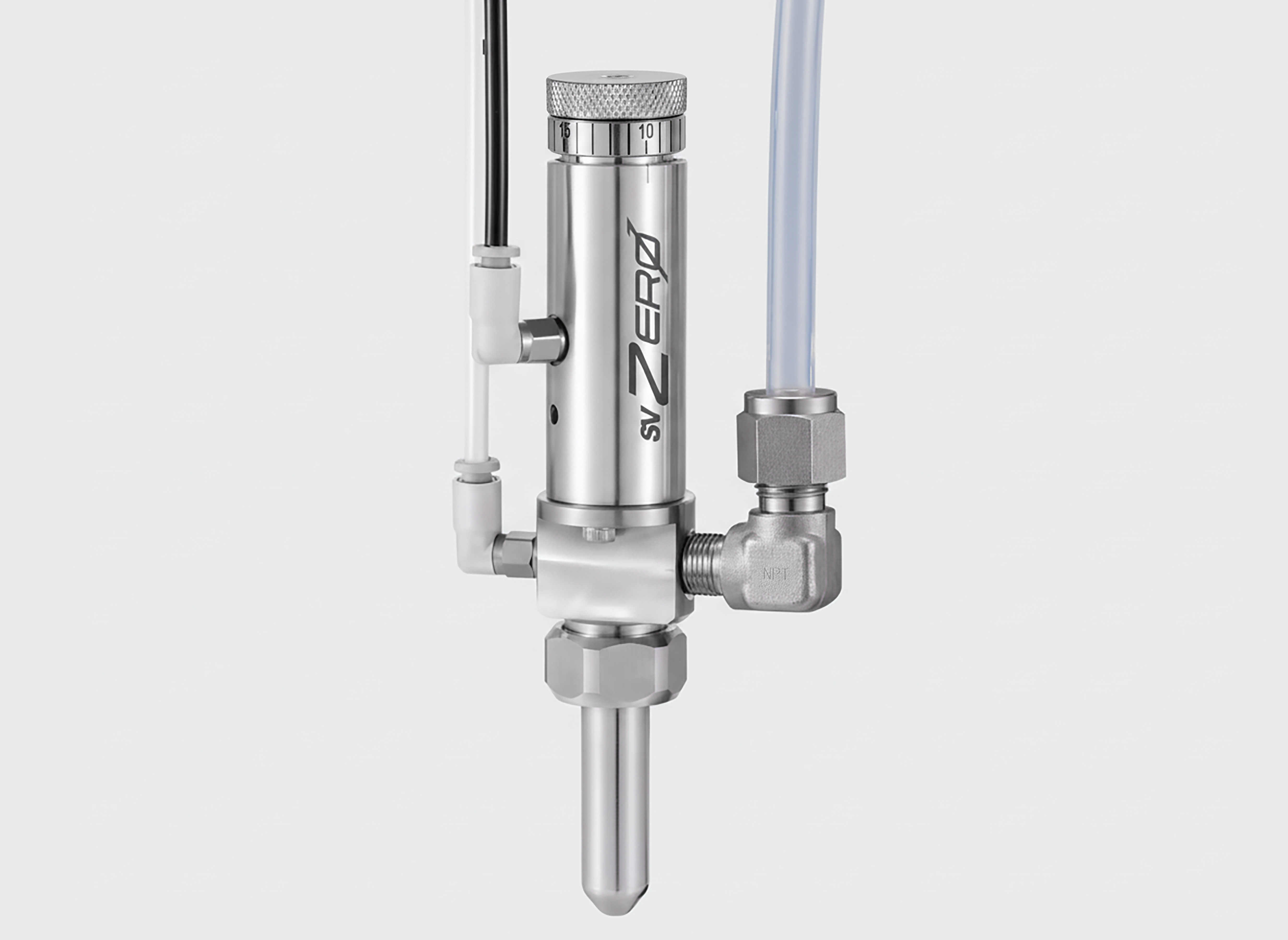
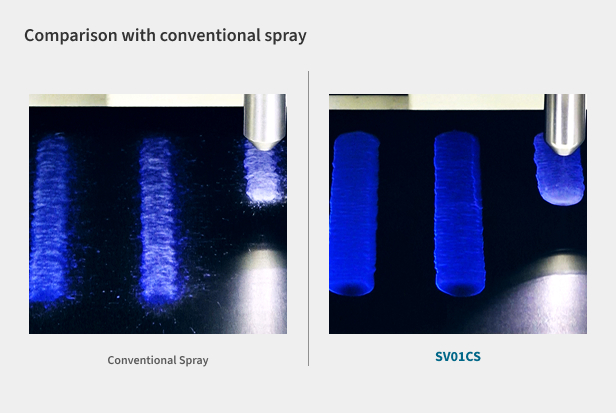
The SV01CS is a spray valve for substrate coating that is capable of spraying low to high viscosity liquids up to approximately 10,000mPa(s). It is designed to achieve a high-precision, non-contact spray application with reduced scattering. The valve is compatible with liquids not subject to VOC regulations, such as UV materials, silicone, and epoxy. When used in combination with the SVC620S controller, the system allows for easy atomization adjustment and establishes high reproducibility.
Features
- High Viscosity Control - Provides spray control for low to high viscosity materials up to approximately 10,000mPa(s).
- VOC-Free Compatibility - Compatible with liquids not subject to VOC regulations, such as UV materials, silicone, and epoxy.
- High-Precision Application - Achieves a high-precision, non-contact spray application with reduced scattering.
- Controller Integration - Establishes easy atomization adjustment and high reproducibility when used with the SVC620S controller.
Resources
Specifications
How the Valve Operates
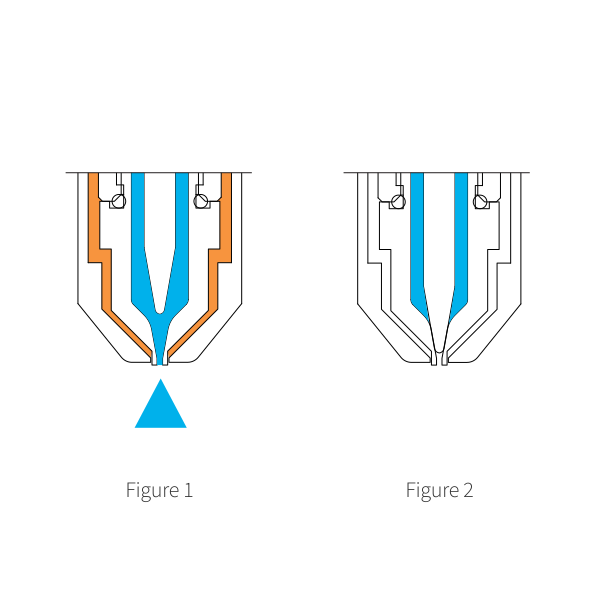
Air pressure retracts the needle from the nozzle seat allowing fluid to flow. Simultaneously, nozzle air flows around the air cap, atomizing the fluid into fine droplets (Figure 1). When the cycle completes, the spring returns the piston needle to its seated position, shutting off fluid flow (Figure 2).


Request more information
Need additional specs, details or help deciding if this product is right for you? We're here to assist.
