
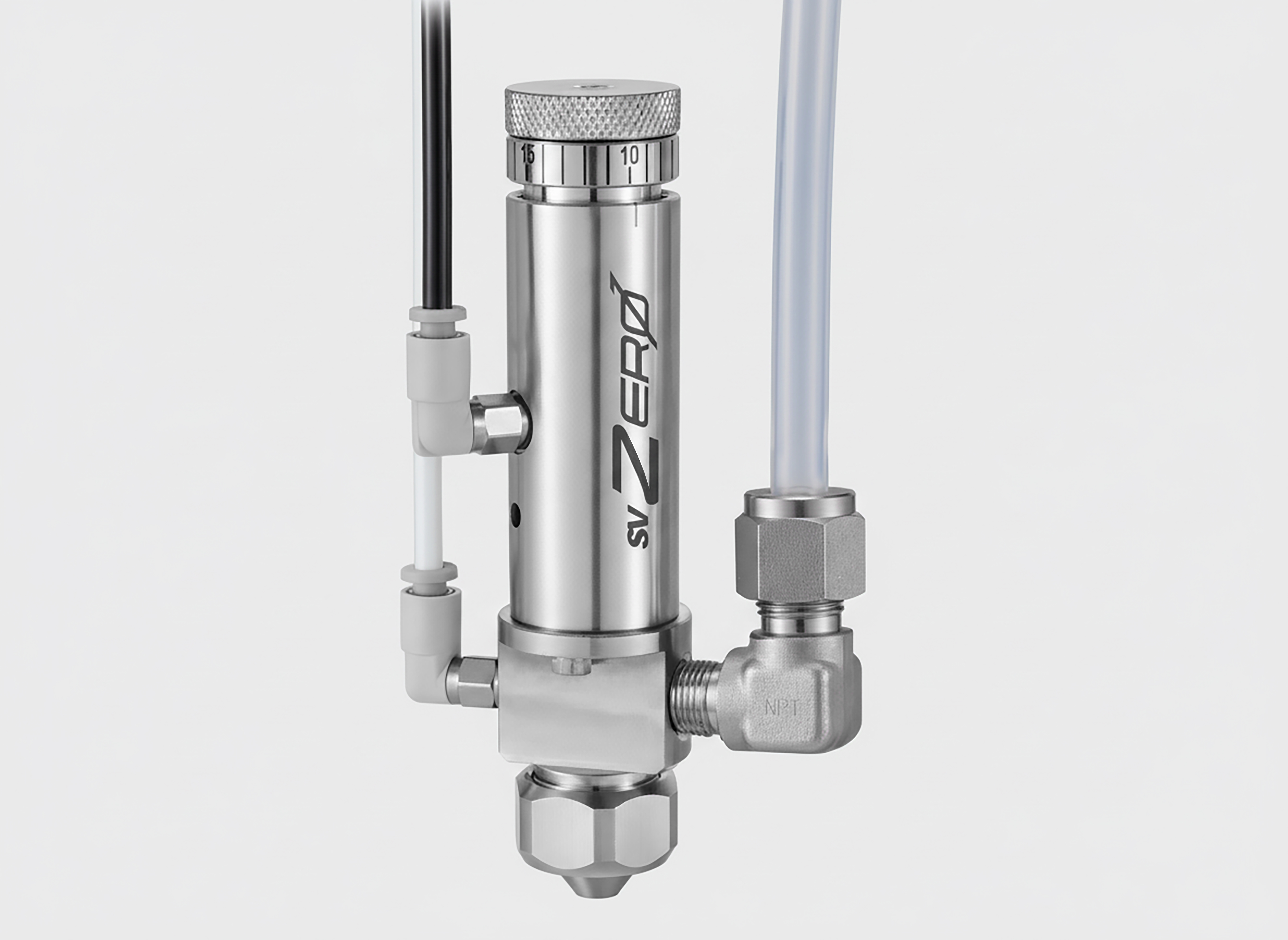
SV Series Valves
The SV01S is a precision coating spray valve specifically designed to handle high viscosity materials without overspraying. It can apply materials with a viscosity as high as 30,000 mPa·s, making it ideally suited for applications involving silicon, UV adhesive, or grease. The valve's design provides a precise coating while preventing the splattering that can occur when dispensing these types of fluids. Different nozzles and air caps can be used with the valve to optimize the spray pattern for each specific application. Additionally, the fluid feeding part of the stainless steel valve is passivation treated.
Features
- High Viscosity Capability - Can apply materials with a viscosity as high as 30,000 mPa·s.
- Splatter-Free Coating - Designed to provide a precise coating without the overspraying or splattering common to high viscosity fluids.
- Optimized Spray Pattern - Different types of nozzles and air caps can be used with the valve to optimize the spray pattern.
- Durable Construction - The valve body and wetted parts are primarily constructed from SUS303 stainless steel with a Teflon® needle packing.
- Passivation Treated - The fluid feeding part of the stainless steel valve is passivation treated.
Resources
Specifications
How the Valve Operates
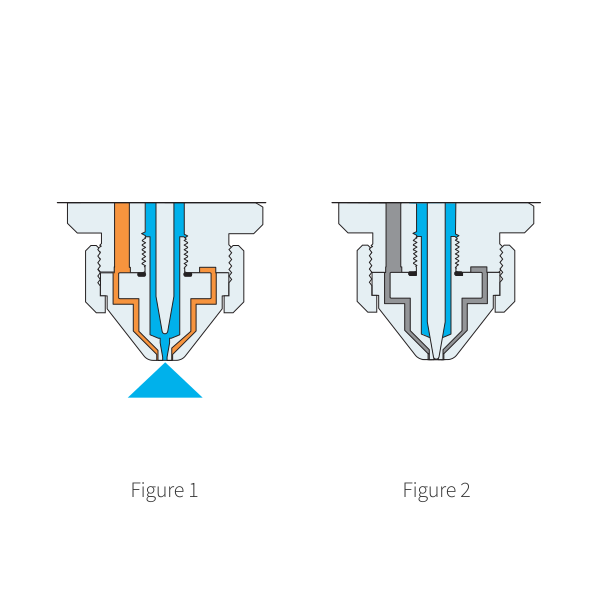
Air pressure retracts the needle from the nozzle seat, allowing fluid to flow. Simultaneously, nozzle air flows around the nozzle to atomize the fluid into fine droplets (Figure 1). When the cycle completes, the spring returns the piston needle to its seated position, shutting off fluid flow (Figure 2).


Request more information
Need additional specs, details or help deciding if this product is right for you? We're here to assist.
