
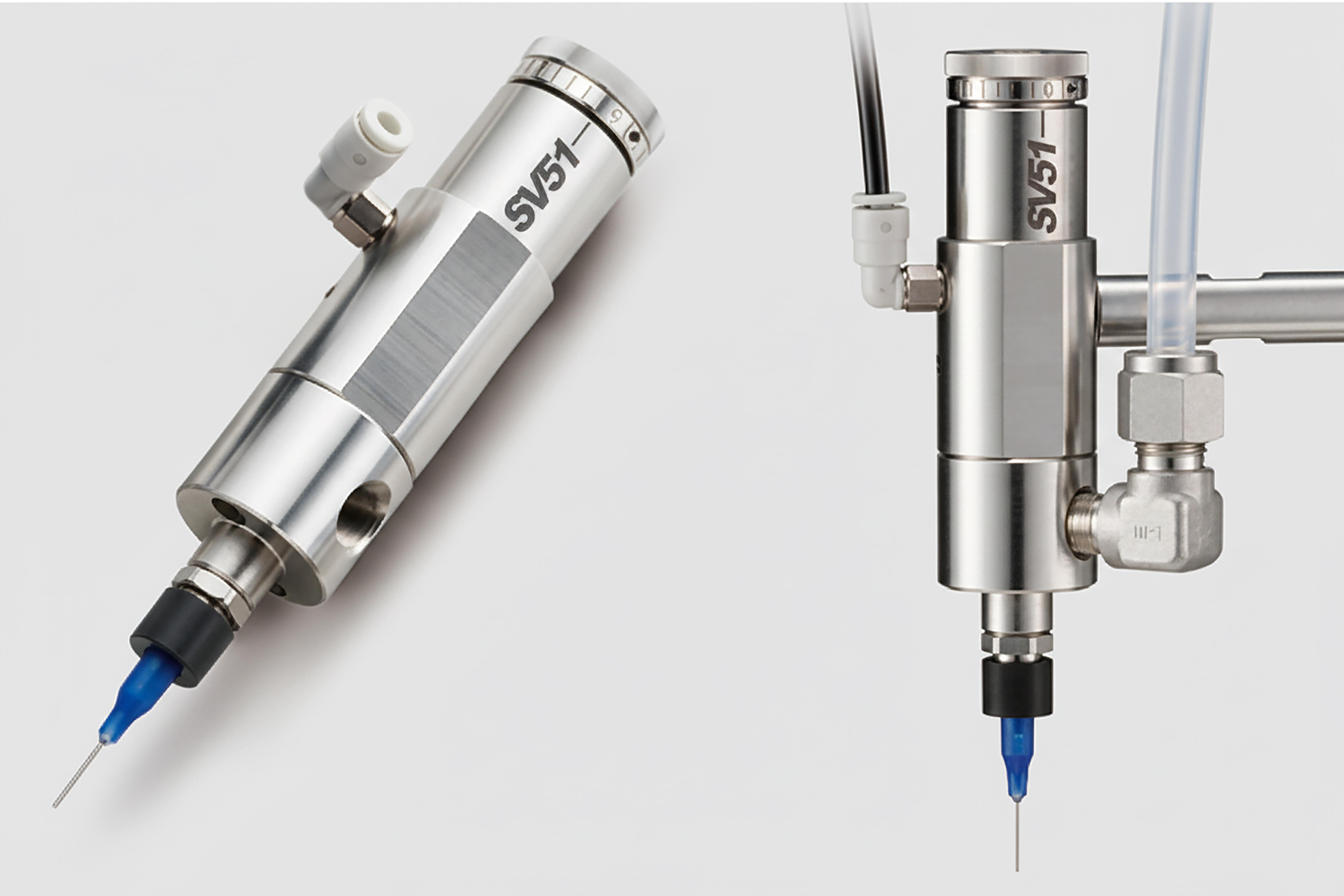
Needle Valve for Repeatable Microdeposits of Low Viscosity Fluids
The SV51 is a precision needle valve designed for accurate, micro-volume dispensing of low-to-mid viscosity fluids. It can dispense liquid volumes as small as 0.001cc and features adjustable flow control, allowing for highly accurate, minute-amount dispensing. The valve's fast-response speed enables a clear, drip-free fluid cut-off, while its internal structure is engineered to prevent air bubbles from entering the liquid and provide excellent drainage. Built with a unique packing structure for superior durability, the SV51 is a low-maintenance solution capable of running millions of cycles without requiring maintenance.
Features
- Precise Micro-Volume Dispensing - Accurately dispenses liquid volumes as small as 0.001cc, making it ideal for repeatable microdots of low-to-mid viscosity fluids like solvents, oils, and adhesives.
- Adjustable Flow & Fast Response - Features adjustable flow control and a fast-response needle design, enabling a clean and clear fluid cut-off for drip-free operation.
- Reliable, Low-Maintenance Design - Engineered with a unique packing structure that prevents air bubbles from entering the liquid, providing superior durability for millions of cycles with minimal maintenance.
- Excellent Liquid Drainage - The internal structure is designed for excellent liquid drainage, minimizing fluid waste and buildup.
Resources
Specifications
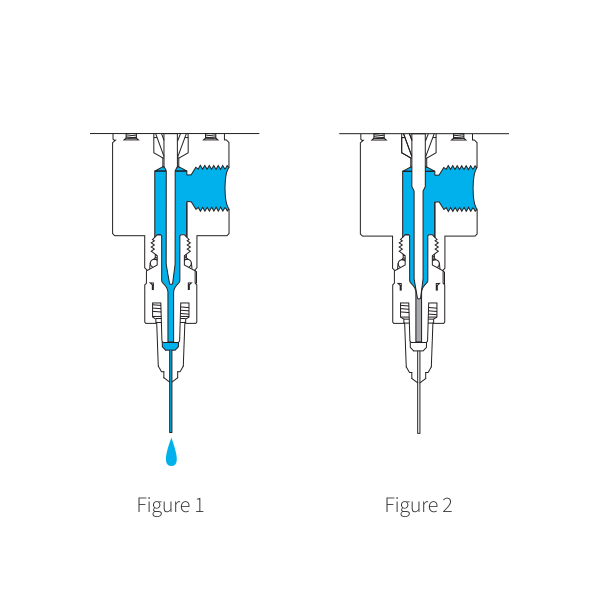
How the Valve Operates
Air pressure retracts the piston needle from the needle seat, allowing fluid to flow (Figure 1). When the cycle completes, a spring returns the piston needle to its seated position, shutting off fluid flow (Figure 2).


Request more information
Need additional specs, details or help deciding if this product is right for you? We're here to assist.
